A New Understanding of PTSD

Changing the Odds

And the Path to Recovery

What if we've been missing something fundamental about the damage caused by trauma?

For decades, Dr. Ivan Gulas has treated trauma survivors—from Vietnam veterans before PTSD had a name, to assault survivors, accident victims, and refugees of war. Over many years of clinical work, one pattern kept emerging. Not just the symptoms everyone recognizes. Something more fundamental. Something the existing models weren't quite capturing.

Order Now

"Changing the Odds - a most engaging and straightforward read
on a very complicated subject"     Dr. Martin Kaplan, M.D., J.D.
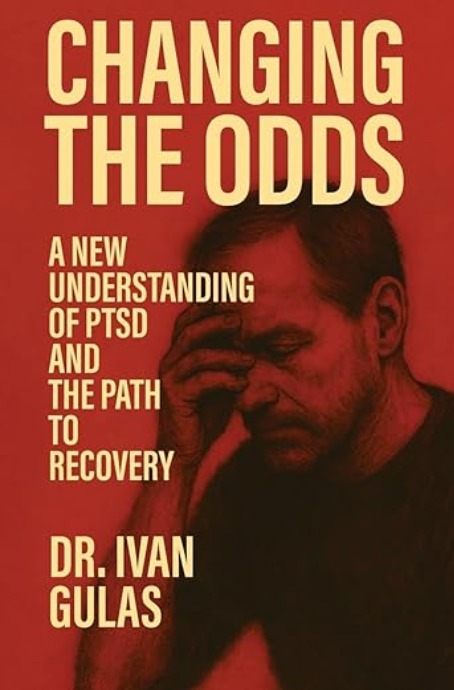
Changing the Odds by Dr. Ivan Gulas - Book Cover

A woman survived what should have killed her. A pickup truck ran a red light at forty-five miles per hour and T-boned her sedan on the driver's side. The door collapsed inward eighteen inches. She walked away with bruises and a concussion.

Eight months later, she cannot make herself get into a car.

Not because she's being dramatic. Not because she's weak. But because something broke in those three seconds of screeching metal and shattering glass—something more fundamental than bone or tissue.

Her brain's system for assessing danger, a system that had successfully predicted "you'll probably be safe" thousands of times over decades, was catastrophically, undeniably wrong.

If it was wrong about that, how can it be trusted about anything?

An Original Framework for Understanding Trauma

This book presents a unifying model that reveals what trauma actually disrupts, why symptoms that seem irrational make perfect sense, and what genuine recovery requires.

1

What PTSD Actually Is

Beyond the symptoms—intrusive memories, hypervigilance, avoidance—lies a core mechanism that explains why trauma survivors experience the world the way they do. This book identifies that mechanism and traces its implications.

2

Why It Persists

Understanding why PTSD doesn't simply fade with time, why knowing you're "safe" doesn't make you feel safe, and why well-meaning reassurance so often fails.

3

What Recovery Requires

A realistic picture of the path forward—not a quick fix, but a framework that explains why certain treatments work, what "the long middle" of recovery looks like, and what it means to live fully even when some traces remain.

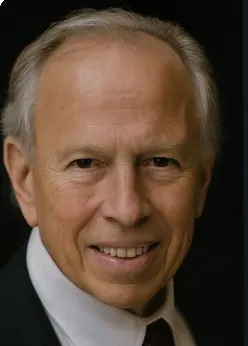
Dr. Ivan Gulas

Dr. Ivan Gulas

Ph.D., ABPP  •  Board-Certified Clinical Psychologist

Dr. Gulas brings a rare dual perspective to trauma—as both survivor and clinician. As a ten-year-old child in Budapest, he lived through the 1956 Hungarian Revolution. On his birthday, October 23rd, the uprising began. Over the following weeks, he watched Soviet tanks from behind apartment curtains, heard the gunfire moving closer, and felt a bullet graze his arm when he ventured too close to the window.

Those childhood experiences—and the anxiety responses that followed him into adulthood—sparked a lifelong inquiry into how trauma reshapes the brain's systems of threat assessment.

For over twenty years, Dr. Gulas held a faculty appointment at Harvard Medical School and served as attending staff at Harvard-affiliated medical centers. His clinical work spans more than fifty years, beginning with Vietnam veterans in 1973—before PTSD was formally recognized as a diagnosis.

In the 1990s, he pioneered access to brain imaging technology for PTSD by designing and deploying the first mobile Brain SPECT imaging unit, work that helped establish PTSD as a whole-brain phenomenon affecting cognition, emotion, and behavior.

"I started my practice seeing returning Vietnam veterans, before PTSD existed in clinical vocabulary, describing symptoms I recognized intimately from my own childhood."

Who This Book Is For

Clinicians & Therapists

Psychologists, psychiatrists, and counselors seeking a framework that bridges theory and practice—a unifying model that makes sense of what you're seeing in your patients and clarifies why certain interventions work.

Trauma Survivors

If you've lived through trauma and want to understand what's actually happening—why your reactions make sense even when they feel irrational—this book offers answers that don't minimize your experience or promise easy fixes.

Families & Loved Ones

For those searching for answers that make sense of what they're witnessing. Understanding the mechanism behind PTSD can transform how you support someone you love.

Not a self-help book. Not another treatment manual.

An original theoretical framework that redefines trauma, effective treatment, and what recovery actually requires.

Order Your Copy

Paperback Edition

$21.99

Ships directly from us.

Kindle Edition

$9.99

Available on Amazon. Read on any Kindle device or the free Kindle app.

Order on Amazon

Discounted Paperback for Veterans & Trauma Survivors

$17.99

We believe cost shouldn't be a barrier to understanding. This discounted rate is available on the honor system—no verification required.

Volume & Institutional Orders

For clinics, universities, VA facilities, training programs, and bulk purchases of 10+ copies, please contact us for pricing.

Contact for Pricing

Paperback ISBN: 979-8-218-94270-0
Published by Salisbury & York Academic Press

×

Contact Us